Earlier this week, VAF/GAME announced the results of the final funding call of the year. True to the holiday spirit the commissions wanted to give all the projects the funding they requested, but unfortunately Santa Claus doesn’t fund game developers. Instead, the commissions decided to spend every penny of the remaining budget on the following promising projects.
Pre-production
Happy Volcano impressed both commissions and received € 49.980 for Shadow (serious game) and € 28.952 for Black Oil (artistic game)
LuGus Studios received € 30.000 for Snoezel VR (serious game)
Production
3D Aim Trainer (serious game) is an online training platform that aims (pun intended) to turn first-person shooter noobs into first-class sharpshooters. To improve the platform beyond its current scope, the 3D Aim Trainer devs received € 125.985
The speech experts at Say IT Labs received € 125.985 for their voice controlled speech therapy game The Fluency Fox (serious game)
Promotion
On top of their publishing deal with Iceberg Interactive, the commission has handed out € 39.850 to Get Up Games in order to get even more wind in the sails of their ambitious pirate battle royale Blazing Sails (entertainment game)
After succesfully finding support for pre-production and production, like Charlie has received € 50.000 to help market their commercial debut Ghost on the Shore (entertainment game) towards success.
Congratulations to all the studios that secured funding and support. We hope you’ll be able to use the extra resources to craft some truly wonderful games and help expand the international renown of the #BelgianGamesIndustry.
VAF/GAME can look back at a very good year in which the quality bar of submissions was raised considerably. Keep this in mind if you’re interested in securing a slice of next year’s funding and take a look at some example submissions (link in Dutch) to get an idea of the bar you’ll need to clear. The first funding call deadline of 2020 is January 28. Good luck!
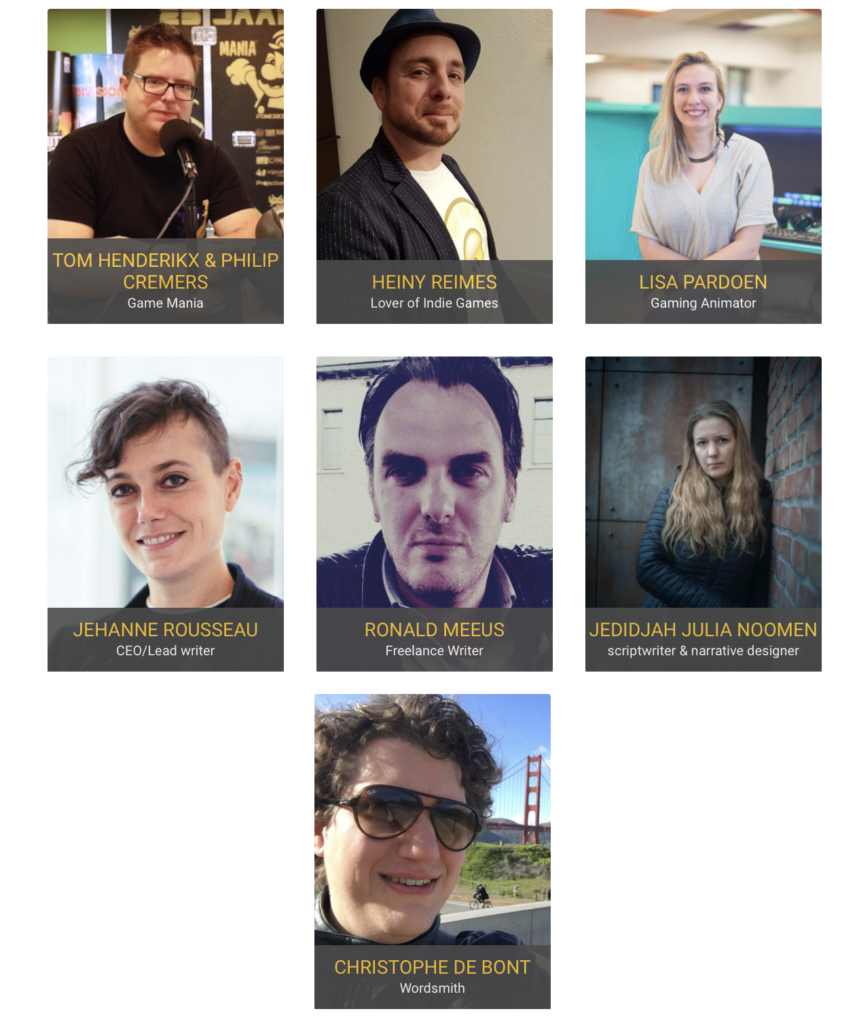
Submissions for the BelgianGameAwards 2020 wrapped up with close to 50 entries. That means another daunting task for the jury to select the nominees and ultimately decide who takes home the prize. Here are this year’s brave souls who signed up for the job.
Tom Henderikx and Philip Cremers are the current marketing tandem at video game retailer Game Mania. They create regular video content where they amaze viewers with their video game knowledge and passion.
Ronald Meeus is freelance writer covering video games and the games industry for publications such as 9lives, De Morgen, Het Laatste Nieuws, Data News, and Invader Magazine for more than 15 years.
Jedidjah Julia Noomen is a Dutch script writer and narrative designer. She started her career in film, tv, and theatre and transitioned to games. Most recently she wrote the full audio based game Alt Frequencies for Accidental Queens. She’s also programmer Games & VR for Imagine Film Festival.
Lisa Pardoen works at Quai 10 cultural center as a host. She’s discovered the world of video games during her studies at HEAJ in Namur and loves to share her passion, for instance by hosting workshops to teach young people how to create video games.
Heiny Reimes is a Dutch indie games evangelist and content manager for Utomik. Away from the office he puts lesser known indies in the spotlight on Twitter and hosts a popular Discord channel where indies are able to help each other out.
Jehanne Rousseau is CEO and lead writer at French game studio Spiders. She’s been in the industry since 1998 and co-founded Spiders 10 years later, creating succesful games such as The Technomancer and Greedfall.
Christophe De bontis the only surviving member from last year’s jury duty and crazy enough to do it once more. He’s a freelance journalist that’s been writing about games since 2006 and currently covers games for De Standaard.
The Belgian Game Awards 2020 will be presented on February 21 at 1UP Conference in Kortrijk. Stay tuned to our blog to find out who gets nominated later this month.
This celebration of #BelgianGamesIndustry success wouldn’t be possible without the valued support of WALGA, ScreenBrussels, VAF|GAME, Flanders DC, and Cronos Interactive.
The 25th edition of Kortfilmfestival Leuven is opening its doors in arts centre STUK from November 30 until December 7. For the first time the programme of the prestigious festival includes screenings and activities based on games. Here’s what’s in store next week. Do read on, because we have free tickets to hand out!
In the exhibition Small Games, Big Screens the courtyard of STUK will showcase a visually arresting video game on a big screen from 17:00 until 23:00. Passers-by can marvel at the beautiful visuals or get to grips with indie classics like GRIS, Celeste, Journey and INSIDE themselves. Each night a different game will be screened, so check out the programme to see when your favourite’s up!
Game On! is a unique compilation of 7 shorts that shows what happens when the worlds of film and game making collides. The compilation includes short films that use the visual language of computer games to tell their own story and shorts by video game developers parallel to their own game, as a way of promoting the game or as a stand-alone concept. Game On! is screening on November 30 at 16:30, December 3 at 22:30, December 4 at 15:15 and December 6 at 17:00. Tickets are € 8,50.
On the final day of the festival, games are celebrated even more. In the Gamestorm (December 7 at 15:30) competition film and game design students come up together with a game concept they have to pitch in front of a jury. Earlier in the day, there’s also a master class video games (December 7 at 13:00) by game writer Dagmar Blommaert and film director Hans Van Nuffel. Together they will explore the possibilities and pitfalls of writing for video games.
Tickets for this double bill master class are € 8,50, but thanks to VAF/GAME we’re able to give some away for free. Afterwards there’s a network event with a free drink. We’re pretty awful when it comes to clever questions, so all you have to do is send a mail. First come, first served!
VAF/GAME will probably be the first public institution our local game studios turn to in order to secure funding. While they go a long way to support promising Flemish games, don’t forget there’s more funding options out there, such as the Creative Europe Media grant.
WHAT?
The European Commission has published a new call (link in Dutch) for ‘Supporting Video Games’ to promote the development of video game concepts or projects intended for commercial exploitation on the European and international market. The deadline for this call is February 12, 2020.
This year the European Commission provides a total budget of € 3,78 million. Applicants can ask for a grant between € 10.000 and € 150.000 but the contribution can’t exceed 50% of the total development cost.
WHO?
The applicant must be located in an eligible country (link in Dutch only) and have a proven track record (defined as release of at least one game that was commercially distributed during the two years preceding the call i.e. January 1, 2018). Only legal bodies that have their offices in Europe and that own the majority of the rights related to the submitted project can apply. Individuals, groups of companies and legal bodies acting in the public interest (e.g. universities, foundations …) may NOT apply for a grant.
The games are judged by independent experts on overall quality, originality, innovation and creative value. Besides that there must be a commercial drive behind the project. Of note: all games require a narrative component, but your game doesn’t have to revolve around the story. Games that value gameplay over story, like Trine 3 or SteamWorld Heist have been funded in previous years.
HOW?
To be able to participate, you must first register yourself and your organisation with the European database. Once you have done this, you can submit your application. Online submissions can be sent until Februay 12, 2020, 5 PM CET. You can start your registration (link in Dutch) right now. The lovely people over at EGDF, European Games Developer Federation, were so kind to create this wicked checklist to see if you’re eligibile for a grant and to clarify what you need to include in your application (this list dates from 2019 call but it still provides helpful guidelines for 2020 call). And it never hurts to take a look at this guide for applicants either.
FISHING FOR SUCCESS
Fishing Cactus is the national champion when it comes to European funding. The Mons based studio has been granted funding for two consecutive years now, € 77.000 for Nanotale – Typing Chronicles in 2018 and € 138.000 for project Wormworld this year. If more Belgian developers would take a shot at it (there have never been more than three Belgian entries), we’d for sure be looking at more success stories. So be confident, throw out a line and who knows you’ll end up with quite a catch. Good luck!
This is the second part of our two-part blog (go here for part 1) where we take a closer look at our beloved industry and the different roles you can play in it. Talking to the people behind the games, we hope to highlight the many possibilities local game development can offer to anyone who’s eager to jump right in.
Again, this list is hardly exhaustive. On top of that, in many smaller game companies roles will blend into each other as there’s simply not enough people to individually cover all areas. More so than other software development, creating video games is a collaborative effort: there’s no job more or less important and collaboration and communication are key to successfully wrap up a project that stands a chance in an extremely competitive market.
Game Design
The idea for a new game can sprout from many places, but without proper execution and follow-up, the best ideas can become totally worthless. Game designers not only are the primary source of these ideas, but also watch over the game’s assets and documentation so the other people on the team understand what needs to be done. The best game designers not only have exceptional organisational skills and a knack for analytical thinking, they also have a good grasp of the development process and understand like no other what makes the game tick.
Jill Van Parys, co-founder of educational game developer Curious Cats: “After carefully listening and researching what message we want to convey, the best part of my job is figuring out how to reach that goal using games or gamification. To find that fine balance between creating a fun game without losing track of the educational value.” She mentions there’s very little female end bosses in Belgium, which implies she’s often the only woman at the table. “Sometimes you’ll need to push a little bit harder to get your voice heard, but it can also be an advantage as you stand out. It’s a good thing I’m not shy.” According to her, the best way to enter the industry is to believe in yourself, stand up for your ideas, and build a wide network.
Audio
Often overlooked or taken for granted, audio is another key discipline in game development. Watching a blockbuster movie with the sound turned down doesn’t produce half the experience it could have been and the same goes for games. Sound engineers are in charge of bringing the game world to life with sound effects. Having to create sounds for which there’s no real-life alternative, they have to get very creative to produce believable results.
Music has the ability to enhance an experience like no other. Coming up with a theme that’s completely in sync with the mood you’re trying to evoke, is a gift reserved for skilled composers. These people are often classically trained, live and breathe notes through their every pore and have a deep understanding of the emotions a game wants to convey.
Narrative Design
Storytelling is becoming increasingly important in modern video games and that’s where the narrative designer comes into play. Dagmar Blommaert, co-founder of like Charlie is in charge of designing the story and characters on their upcoming narrative adventure Ghost on the Shore. “I write all the dialogues and work closely with the team on game design and mechanics to make sure they fit the story. I also cast voice-over actors, do voice direction and edit a freelance writer that’s working on lore.” With a background in Germanic languages and screenwriting, she says she dropped in the industry by chance, getting hired as a writer by Die Keure on the Kweetet project. “I had to learn everything on the job and was helped by a team of wonderful colleagues. We still work with these people at like Charlie.”
Marketing
Creating the best game nobody’s heard about will only make you famous after you’ve starved to death. Marketing has become ever so important, and while there are a lot of specialised companies to help you out, it really pays off to have somebody on the team that knows their 4 C’s.
Sophie Schiaratura, PR Manager at Fishing Cactus, is the shining example that game marketing is a very broad discipline. “I am in charge of public relations, communication, marketing, and community management.” There’s a lot of stuff on her plate, yet she says it doesn’t feel like a job. “It’s all about sharing my passion with people. I have a degree in advertising, and so I can advertise any product. I’ve always loved video games, and have been playing them since I was seven years old. When I saw that Fishing Cactus was hiring a PR manager, I was curious. I thought that maybe, instead of selling random products, I could start to sell things that I love.”
Like we mentioned earlier, this list isn’t exhaustive, so please don’t be offended if your discipline was left out. Through this two-part blog, we hope to have painted a better picture of our industry for aspiring game developers of any race or gender. Once again, in an effort to create an even playing field and put talent first, reach out to us if you want to join the #BelgianGamesIndustry. Please send us your resumes so we can distribute these through our channels. Let’s make our local community more diverse, more creative, and more powerful as a result.
Primarily known for its pristine drone simulator Liftoff, long time FLEGA benefactor LuGus Studios is heading in a very different direction for its next game. Talking with co-founder Kevin Haelterman, one of the key reasons for starting this project, which is based on an idea by ex-colleague Sam Agten, was to show his studio can make more than just really good simulation games. The other reason: the idea is just too cool not to do it.
Midnight Protocol is a tactical narrative-driven RPG and tasks the player with hacking various computer networks. Set in a near future filled with labor automation, big data, controversial AI applications, and a lot of legal gray zones, you assume the mantle of a prominent hacktivist who has been targeted for blackmail by a shadowy branch of government. Certain decisions you make while rummaging through someone’s encrypted closets will determine whether you’re a white, grey, or black hacker. This will not only grant you access to specific hacking tools, but will also steer the branching narrative and outcome of the game.
The team has closely studied fictional hacking in movies to be able to recreate the same experience while playing the game. Going by the demo we played, they absolutely nail that feeling. Sitting behind your computer, tapping away commands in the dark to outsmart security systems, or head into full-blown cyber combat with other hackers tasked to defend sensitive data, Midnight Protocol does an excellent job at simulating the hacker fantasy.
The game has recently received VAF funding and is slated for a release next year on Steam, Mac, and Linux. We can’t wait to see, hear, and play more of this exciting new project.
 Christophe De bont
 06/12/2019